Unified incident map
Community reports and third-party hazard data render on a single map with clustering and filtering, so density and correlation are visible at a glance instead of buried across separate tools.
The command center for investigations that matter.
Sleuth Net is where field reports, authoritative hazard feeds, and case work meet on one map. It is built for the people who have to turn scattered signals into a decision — investigators, analysts, and coordinators working an active problem.
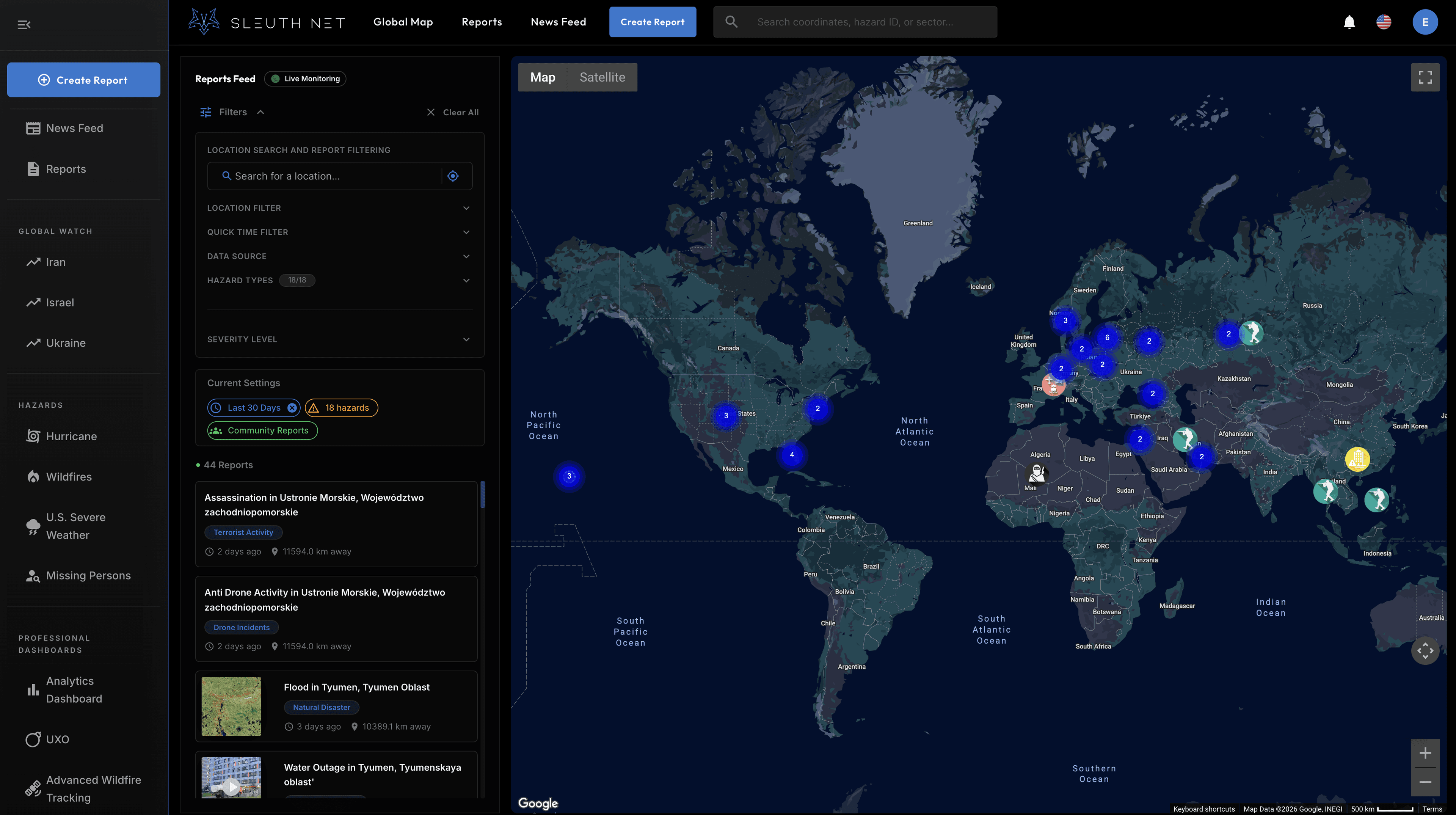
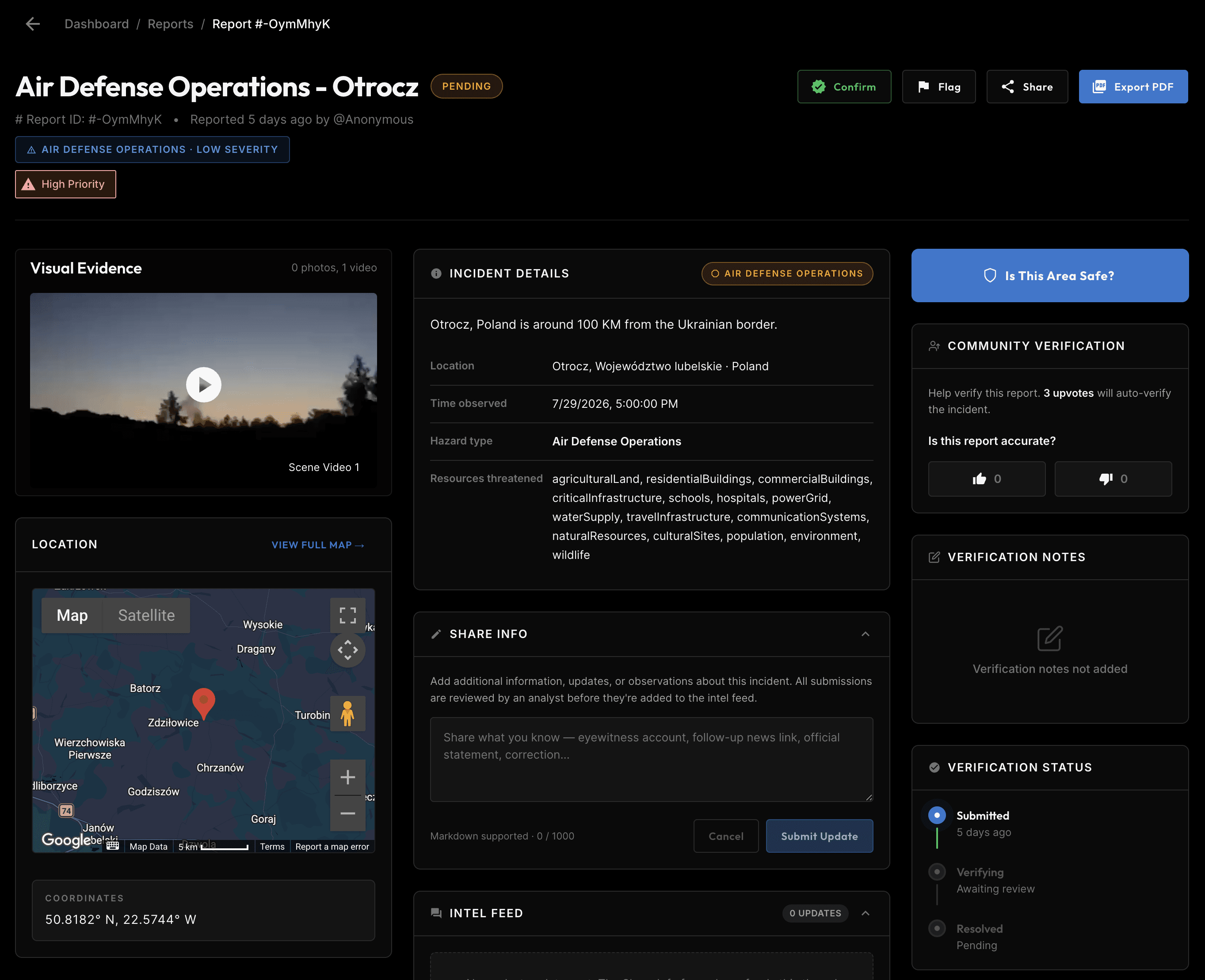
Community reports and third-party hazard data render on a single map with clustering and filtering, so density and correlation are visible at a glance instead of buried across separate tools.
Environmental and security events are tracked continuously from authoritative sources, giving analysts the same picture whether they are working a local case or a cross-border one.
Forums let users corroborate and challenge reports. Professional communities require verification for full participation; unverified accounts have read-only access, keeping the validation signal meaningful.
Reports can be organized, annotated, and tracked over time, so an investigation accumulates context rather than restarting at every shift change.
Enough of the architecture to judge whether we know what we are doing — not enough to hand someone a blueprint.
External feeds are proxied and normalized server-side, never fetched from the browser. That keeps API credentials out of the client, insulates the interface from upstream outages, and lets a failing source degrade quietly instead of breaking the map.
Sources with incompatible shapes — event feeds, records systems, community submissions — are mapped into one internal hazard representation, which is what makes cross-source correlation possible at all.
The map layer is built to stay responsive as incident volume grows, with clustering and viewport-driven loading so an analyst is never waiting on data they cannot see.
Verification tiers govern what each account can see and do, enforced at the data layer rather than hidden in the interface.
Sleuth Net draws on authoritative external feeds alongside our own network, so community reporting is corroborated rather than taken on faith.